Tuesday, 10 February 2015

Free will and the limits of science: a reflection


There is a lot of talk among neuroscientists about whether science shows we have free will.

Every sane person knows we have free will and does not consider it to be an illusion. If you were an automaton  without the power to make a decision you would not even be aware of the concept of free will. It is part of what it is to be human. If science ever shows we do not have free will it can only mean that scientific methodology is dealing with a small fragment of a greater multidimensional realm and consequently cannot be right about every aspect and dimension of reality.

Conversely, if science proves we do have free will it will tell us little about its true nature because free will must originate from outside of the deterministic order (within 3 dimensions of space and 1 of time) which can be investigated by logic and experiment. Its true nature lies in a greater multidimensional reality outside of space and time and in some way connected to the self-existential source beyond nothingness from which all reality emanates and originates: God.

The circular arguments of materialism concerning the nature of consciousness and free will arise from an anachronistic mindset, a dualistic mind vs matter thinking that has grown up over the few hundred years since the Renaissance. The latest discoveries in quantum physics, the objective evidence for a soul operating beyond the brain, 

e.g. out of body experiences in which previously unknown objects are reported on by the subject and visual NDEs by people blind from birth

the emergence of the universe  from outside of space-time and the growing awareness that even the universe we have deduced  is over 95% inexplicable, all point clearly to a greater reality than any 19th century materialist could ever have envisaged.

Did mind come from matter or matter from mind? Descartes maintained they are totally unlike each other. So neither does mind cause matter or matter cause mind; they may simply be twin aspects, very different aspects, of one underlying fabric of a realm beyond rational investigation.

So science itself deduces its own severe limitations. Nevertheless it has served us well by revealing at least some of the wonders of the part of creation we know about and allowing us to develop useful technologies beyond the dreams of only a century ago.

Science and technology have been  superb servants of humanity. The danger today is that some want them to be our masters, with the scientists acting almost as priests. In 2077 science and technology are definitely servants in helping defeat violence. At the same time  the SSS cult uses them to achieve evil. Ultimately the battle of good against evil can only be won by human will in a state of humility before our Creator.

John Sears
Author


Reach me at
cosmik.jo@gmail.com


Thursday, 5 February 2015

Biomimicry: city design, textile colouring and much else


Water Wall
One approach to keeping the biosphere evolving in a sustainable way is to concentrate on new and existing cities and aim to give them the same ecological footprint as the terrain they cover. It is in cities that over half the world population lives and there seems to be a general consensus that this proportion will continue to increase.

Making a city fit into its ecological niche is much easier for a new city: it can be designed from scratch to store water and emit gases (cabon dioxide, oxygen, water vapour etc.) in similar quantities to, say, a deciduous forest as well as sustain a small amount of local flora and fauna within its boundaries and not cause local soil erosion or pollution.

Some 400 new cities will be needed, for example, to help accomodate the rapidly growing population of India, so it is important to get the design principles right. The methods developed could to some extent be applied retrospectively to existing cities and urban sprawls throughout the world.

A pioneer of biomimicry of cities is Janine Benyus who is working with her colleagues at the Biomimicry Guild and with large corporations such as Walmart, Nike and Interface. Currently she appears to be working with HOK, a large architectural developer, on two major projects: one to build a city from scratch in India and one to retrofit an existing city in China.

What I find encouraging is that after her book Biomimicry: Innovation Inspired by Nature was published in 1997 Benyus was approached more by business leaders than by green activists.

Biomimicry is much broader in scope than city design and involves mimicking nature to achieve more efficient, ecologically sound technology.

 For instance, most butterflies wings only use one pigment, a brown one(?): all the other colours are produced by their microscopic surface structure which reflects and refracts light in a similar way to the droplets of a rainbow. The textile industry is now beginning to colour some of its fabrics this way, so that pigments and dyes don’t have to be used. This should reduce pollution while at the same time providing scope for striking optical effects in the fashion business.

Further examples of how nature offers engineering solutions (these are just a few out of thousands):
  • The abalone, an ear-shaped shell with a pearly interior, generates an inner shell twice as tough as the best ceramics.
  • Diatoms (unicellular algae with silica impregnated cell walls) make glass from seawater and require no furnaces.
  • Spiders manufacture silk as strong as Kevlar (used in bullet-proof vests) and tougher, but without boiling sulphuric acid or high-temperature extruders. Digested crickets and flies are the only raw materials.
  • Trees turn sunlight, water and air into cellulose, which is stiffer and stronger than nylon, and bind this into wood.
  • Snake inspired robots imitating the snake's body shape and movements. E.g. remotely controlled hose for fire fighting.
  • New type of cement based on coral chemistry.
  •  Boat hulls based on shark skin design for hydrodynamic efficiency and reduction in papasite growth.
  • Painless hypodermic needle is being developed which is inspired by the way mosquitos bite
  • Bullet train with a beak inspired by the design of a Kingfisher's bill. This avoids noise pollution when the train emerges from a tunnel.
  • Camouflage researchers are copying the way this is done in nature, e.g. by the octupus.
  • Air conditioning inspired by the air cooling in a termite nest by complex porous surface that generates airflow through the tunnel.

 Certain strains of algae when deprived of sulphur produce hydrogen by photosynthesis instead of oxygen. R&D on this is has been pursued at the Argonne National Laboratory (US Department of Energy) and if successful the hydrogen could be used for fuel cells. Strictly, this is the modification and exploitation of a biological system  rather than mimicry. The economic and sustainability implications would be enormous.
Biomimicry and adaptation of natural systems could do a lot to give us a more sustainable, cleaner and more attractive environment and provide fulfilling employment as the western economies try to escape depression.

 God/nature has provided us with a gift and it would be ungracious/stupid to refuse it.

John

Tuesday, 27 January 2015

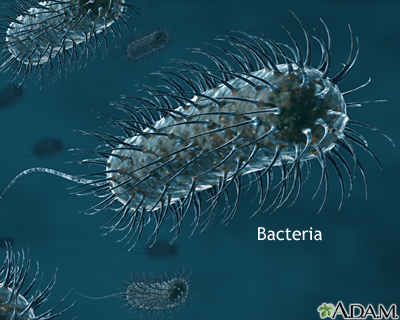
Natural technology: the bacterium

image credit: https://ufhealth.org/anaerobic-bacteria


The simplest form of life – a single-celled organism such as a bacterium – is made up of 10 million million atoms. Cells within the human body are at least comparable in structure. They form a system immeasurably more complex than anything artificial, comprising a hierarchy of integrated subsystems and architectures using thousands of different proteins, their actions orchestrated in some inexplicable manner.

In his book The Way of the Cell (Oxford University Press, 2001,  p.329) Franklin M. Harold compares it to a high tech factory comprising

  • Control mechanisms regulating the automated assembly of parts and components


  • Software languages and their decoding systems


  • Memory banks for  information storage and retrieval

  • Quality control systems with error fail-safe and proof-reading


  • Assembly processes involving prefabrication and modular construction

Each one of these functions requires intelligence, decision-making and information exchange to an extraordinary degree and the whole organism responds and adapts to the external environment in a purposeful way. Moreover, the entire mobile factory has the ability to self-replicate in a few hours.


A bacterium is an example of a single-celled organism. To get a better idea of the scale of the engineering task solved by nature consider just one part of a bacterium: the propulsion unit. This is a microscopic propeller for driving the bacterium through a fluid. The propeller takes the form of a whip made of a protein called flagellin, which is why the whole propulsion unit is called a flagellum.  

The flagellum is about 2 microns in length and is powered by a motor only 1/5th this size. It can spin at 10,000 r.p.m. and stop the spin in only one quarter of a revolution and instantly start spinning in the opposite direction. Connecting the flagellum to the drive shaft is a hook protein which acts as a universal joint which allows the propeller and drive shaft to rotate freely. The drive shaft penetrates the wall of the bacterium with the aid of a bushing material comprising several types of protein and connects with a rotary engine which gets its energy from the flow of acid through a membrane, itself a complex process yet to be understood. Altogether, the flagellum comprises over thirty different proteins. (This is based on an interview with M.J.Behe reported in a book called The Case for a Creator by Lee Strobel.)

If any one part were missing the whole power unit would not work and each subunit would be useless unless connected into the whole system. A bacterium or any single cell is packed full of complex subsystems like this and they all have to be integrated and choreographed for the bacterium to work.

 Bacteria are incomprehensibly numerous (not surprisingly, given that most of the natural world is incomprehensible in the way it is organised and interrelated). Each person has 10 times as many  bacterium cells as cells in the body-brain system, i.e. 100 trillion vs a mere 10 trillion. They reside mainly in the gut and skin. On the planet as a whole their biomass exceeds that of all the plants and animals put together. The total number is estimated at 5 x 10power30 (5 followed by 30 zeros). Placed end to end they would stretch thousands of millions of light years into space. This may seem difficult to believe - but check with a mathematically inclined friend  or do the calculation yourself.  Let me know if he or she gets a different answer!

What I had not realised until recently is the extraordinary efficiency of the DNA base-pair coding to achieve such a complexity of functions. It does not seem to have much to do with the amount of the coding. The simplest forms of life sometimes have more DNA than a  human being. Evolution  is about creativity and efficient problem solving using minimum resources. Competition between life forms for resources is a factor, but only a factor. In order to compete a biological entity must first be viable.

 Bacteria were around very early on in the history of our planet –  some  5% of the the way through its 4.3 billion years. So the facile answer that it was evolution 'what did it' won’t wash (i.e. the 'evolution of the gaps' argument, by analogy with the 'god of the gaps'). I believe there is evolution and has been since the universe began – but that’s a description, not a causative mechanism. I picture it as the Creator, who is outside space-time, painting a work of art, experimenting creatively, intelligently, as the cosmic masterpiece unfolds, with each atom, star and organism falling into a tapestry. To us it looks like a progressive sequence of events.

Regardless of their recognition of the existence of a Creator I believe that some biophysicists are already looking into the possibility of intelligence entering our universe through quantum phenomena. If it proves to be the case it will be revolutionary indeed.

See also

Natural technology: the virus

The passive gene

SEE ALSO   FACEBOOK PAGE


reach me at
cosmik.jo@gmail.com