Thursday, 13 April 2017

Friday 3 April 33 AD, 3 p.m.: the Crucifixion?


Scholars have previously looked at astronomical, historical and Biblical evidence and been unable to agree on the dates of Christ’s birth and Crucifixion to better than within than a few years. Nor have they known what to make of the reference to the star of Bethlehem in Matthew chapter 2 – was it a comet, a supernova or a planetary conjunction or a spiritual light? 

But as techniques of investigation improve this
situation is fast changing and I invite you to look at the YouTube video (endorsed by senior staff from NASA and the American Association for the Advancement of Science).

The following is derived mainly from this video and you may find it useful to read before and after watching - a kind of summary.


On the video Rick Larson explains  how he went about investigating these questions using


  • Computer simulations of the night sky seen from Jerusalem and Babylon in the first decade BC
  • Reasonable assumptions about the Magi based on the records of Philo of Alexander (15 BC to 50 AD), a Jewish philosopher

  • Careful reading of the biblical accounts of the conception, birth, ministry and Crucifixion of Jesus
  • The accurate prophecy of Daniel while a captive in Babylon
  • Historical records of the Jewish king Herod and the Roman procurator Pontius Pilate

  • Traditional Jewish feast dates (e.g. the Crucifixion must have been in a year in which Preparation Day fell on a Friday)

  • Astrological symbolism in the ancient world (including Roman and Biblical)


Putting it all together he arrives at entirely credible conclusions about the dates of history’s most important events. (NB: the dates giving Jesus’s life as appearing to occur before His birth arise from the switch from the Julian to the Gregorian calendar. It has long been agreed that Jesus was born some time in the first decade BC.)

Subsequent evaluations of Larson's analysis by scholars are unable to seriously question this work. It seems to me, as a layman, that the conclusions reached below rest primarily on the assumption that the Jewish historian Josephus (writing around 90 AD) gave 1 BC as the date of Herod the Great's death, since it narrows down the date of Christ's birth. Traditionally, there has been a consensus that Herod died in 4 BC but looking into it as far as I am able it appears that the earlier Josephus manuscripts do indeed give a date of 1 BC. Apparently, there was a misprint in subsequent copies. The evidence is, I understand, in the British Museum.


September 3 BC: The conception.

The Magi (wise men or astrologers, probably known as the Eastern School)) in Babylon would have seen the king planet Jupiter making a triple pass of Regulus, the king star of Leo (the symbol of the tribe of Judah; see, for example, Rev 5:5), also known as Rex by the Romans and Sharu (king) by the Magi. They would also have seen Virgo rising with the new crescent moon at her feet, reflecting the startling imagery of Rev 12:1-2. Larson confesses that much of Revelation is incomprehensible  and makes the point that it deals with past and future events. My view is that prophecies are rarely unambiguous until after the event, at which juncture they become understandable and serve to strengthen faith in the existence of order in God's overall plan which 'surpasses all understanding'. [I have recently read a commentary on Revelation by Bishop Tom Wright and he makes the point that much of the imagery refers to simultaneously existing aspects of reality, not a sequence of events (e.g. when each of the 7 trumpets is blown it portrays a different aspect).]


June 2 BC: the birth

Venus the mother planet was in conjunction with Jupiter the King. Venus is the brightest object in the sky, besides the sun and moon, while Jupiter is the second brightest. The two of them close together in the sky, appearing to be one, would have been a brilliant spectacle for the Magi as they looked west towards Judea from Babylon. 


Later in 2 BC: the Magi arrive in Jerusalem

They announced that the King of the Jews had been born, causing widespread puzzlement, sceptism and rejoicing by the Jews and paranoia by King Herod.


December 2 BC: the Magi visit the Messiah

As the Magi moved south from Jerusalem towards Bethlehem Jupiter would appear to be stationary in the sky over Bethlehem because of its retrograde motion, as calculated by the computer model, in accord with Matthew chapter 2.


3 April 33 AD: the Crucifixion


The accuracy of this date derives from the recorded fact that the event occurred at a particular time on the Jewish calendar of feasts and festivals. It also corresponds to Daniel’s prophecy (9:25) and circumstantial evidence in the Annals of Tacitus. Biblical data on the length of Christ’s ministry also helps tie it down.  Matthew gives the time of physical death as about 3 p.m. At this time the computer simulation shows that the moon was eclipsed, and would have appeared blood red as it rose above the horizon that evening at the feet of Virgo, in accord with biblical references which Larson gives (e.g. Acts 2:14-21, which quotes the Prophet Joel).


Quoting Larson:

the moon rose already in eclipse, already bloody, fulfilling Joel’s vision. Necessarily, this means that the eclipse commenced before moonrise. With software we can look below the horizon and see Earth’s shadow begin the eclipse. When we do, we find that at 3 PM, as Jesus was breathing his last on the cross, the moon was going to blood. 

The sky at Christ’s birth can be viewed as a kind of visual poetry, with the new moon symbolically “birthed” at the foot of Virgo, the virgin. To complete that celestial poem, on the night of Jesus’ death the moon had returned to the foot of the virgin. But now it was a full moon. A life fully lived, blotted out in blood.
 

The references in Matthew and Mark to the darkening of the sky  and to earthquakes are thought to be related to  terrestrial phenomena known to have occurred in the area. This is being investigated. Incidentally, in my view it is often the timing of biblical events which has a supernatural significance, rather than the event itself. On the other hand at least one quantum physicist investigating the Shroud of Turin claims to have found evidence of an event horizon associated with the cloth. If the cloth is genuinely associated with the Resurrection of Christ this would support the belief that the whole universe was affected, in a sense reborn (the Cosmic Christ, a belief which stretches back to the early Christian mystics).

  The DVD ends with a computer simulation showing what an astronaut standing on the earth-side of the moon would have seen in the sky at the time of Jesus’s physical death.  I don’t want to give this away but the position is of enormous biblical significance.


The website and DVD explain all this and much more. The research is attracting a lot of interest and is ongoing.


What all this means to me as a Christian I am not sure. I had always assumed that such a degree of certainty would never be reached and in a sense the details do not matter. Yet if further research makes this irrefutable it will strongly suggest that events in human history are indeed synchronized to the clockwork unfolding of the universe. It is already becoming accepted that much of the living world is governed by biological clocks, certainly in plants, and that these are even synchronised to each other - so why not the whole biosphere? Could there be a master clock that governs the unfolding of the entire cosmos? A kind of elementary particle, the U-bit , which interacts with every particle in the universe has already been discussed in an article in the New Scientist.

 These relationships between human history and the aspects of the stars suggest a profound cosmic significance in the manifestation of the Creator in our world and the unfolding of the entire Creation. Should the latest investigations and analysis of the  Turin Shroud prove it to be  genuinely the burial shroud of Jesus and to exhibit unique, scientifically inexplicable   physical properties, the reality of the Resurrection, it would seem to me, should get through to the entire human race more vividly and significantly than ever. 

What this would mean for the humanity no mortal could possibly know but it won't stop people like me speculating.


John
Author 2077: Knights of Peace
Reach me at cosmik.jo@gmail.com

Thursday, 2 March 2017

The domestic dog, our enigmatic friend

image from How Stuff Works
Humans have been training, using and relating to dogs for 15,000 years, since the dawn of civilisation. How the domestic dog emerged from wolves is not known: the DNA, archaeological and cultural evidence is confusing. Selective breeding is obviously involved but an experiment with a population of silver foxes in Russia shows that dog-like tameability can be cultivated over 50 years: millenia are not required. (I'm not sure why foxes were chosen, as opposed to wolves, but I imagine the principle must be the same.)

I have never owned a dog and have tended to be rather wary of them; but recent news items and documentaries together with the insights of Hugh Ross in his  Hidden Treasures in the Book of Job have caused me to appreciate what remarkable and unique animals they are. You have probably observed or heard about at least some of their attributes  but you may not have seen them listed together so I hope the following list will be interesting and inspire you to think more about them.


Diversity within the species


Size and appearance vary enormously over some 200 varieties, ranging from the Pekingese to the Great Dane, yet we all recognise them as belonging to the same species. They have a unique genetic code which makes it possible to achieve this diversity by selective breeding. Even character traits differ with the breed and I wonder if this could have something to do with epigenetics, by which learned behaviour (e.g. hunting or retrieving in the case of our canine friends) can be passed on to at least the 3rd generation.

Sense of smell


This is staggering. They can detect the presence of one spoonful of sugar in a million gallons of water ( = 2 Olympic swimming pools). They can also locate the source of a smell because they have a nose in which the nostrils are far apart in relation to the diameter of each and are able to tweek each nostril independently. This obviously makes dogs very useful – e.g. in explosives detection and tracking by scent. See also the dog's dazzling sense of smell

Facial expressiveness


Humans see them as able to smile and look guilty. It makes it easier to relate to dogs more than any (or almost any?) other animal. Research by Alexandra Horowitz  (‘Disambiguating the ‘guilty look’: salient prompts to a familiar dog behaviour’, Behavioural Processes, July 2009, p.447-52) indicates that the guilty expression is associated with the desire to please the owner, not with any innate sense of guilt as is felt by humans.

Facial recogniton

Dogs are able to recognise the face, not just the scent, of their owners, see this abstract from the Journal of vision.  They can also pick one out in a crowd and, again, experiments have eliminated the possibility of scent. Dogs can recognise other dogs from hundreds of photographs of all shapes and sizes.

Ability to read cues or read minds

Dogs sometimes seem able to read minds but research by Mark Petter et al (‘Can dogs detect human deception?’, Behavioural Processes, October 2009, p.109-18) suggests that in fact they are picking up subtle visual cues. Yet there is so much anecdotal evidence of telepathy that this question must remain open. I know of cases where a dog can detect whether its owner is on the way home from work, although it could be that he is picking up the owner’s scent.


Consolation of humans in distress

Sensitivity to human distress is widely reported and research by Custance and Mayer reported in the Economist (July 30 2012) on a dog’s tendency to console a person who is crying confirms that this is a real phenomenon. The behaviour is definite but could it be that the dog’s hypersensitivity to smell detects certain olfactory signals which the body may emit when emotionally distressed? In any case, it is a remarkable gift to a person in distress.

Loyalty

It is well known that dogs normally show great loyalty to their owners and respond to their affections.

Jealousy

Many owners report signs of jealousy and I came across this report of an experiment reporting this.

Trainability and usefulness

Of all the animals there is something about dogs that makes them more trainable than any other. This together with their skills and attributes make them extremely useful and companionable to humans.

Servants to the lost, the blind and the sick

The ability of dogs to track escaped criminals, retrieve prey, catch pests, herd sheep, rescue victims in disaster zones, act as guides for the blind or partially sighted and sooth the anxious is well known. It is also generally accepted that owners of dogs live longer and healthier lives. However, recently there have been startling findings on their use in detecting dangerously lowblood sugar levels in diabetics and in warning of epileptic attacks, typically ten minutes ahead.  Dogs can also detect cancer long before it can be diagnosed by modern medicine.


All the above is not to say that dogs can’t also be problems if adopted as pets or working dogs by the wrong owners or owners in the wrong circumstances.  Yet in the history of civilisation they have had an overwhelmingly positive role, one that continues to grow.

 The average neo-Darwinist evolutionary biologist will interpret all this as the product of random mutations, the laws of physics, natural selection, domestication and breeding by human beings. This is a very restricted (boring?) and materialistic view of reality. As a Christian I think these remarkable creatures are also gifts from God to us and that we, unlike any other creature, are made in the image of God, the imago dei. Which is why we are writing blogs about dogs, protecting them against cruelty and organising dog shows; and they are not having international conferences on us. They are there to reflect the human soul and teach us how to relate to God, perhaps because they are in a sense closer to God, being free of egotistical self consciousness.

 See also Scientific American blog and links
John
2077 AD


Monday, 6 February 2017

Hold on to the Truth, not the Theory of Everything

While there is life there is hope...
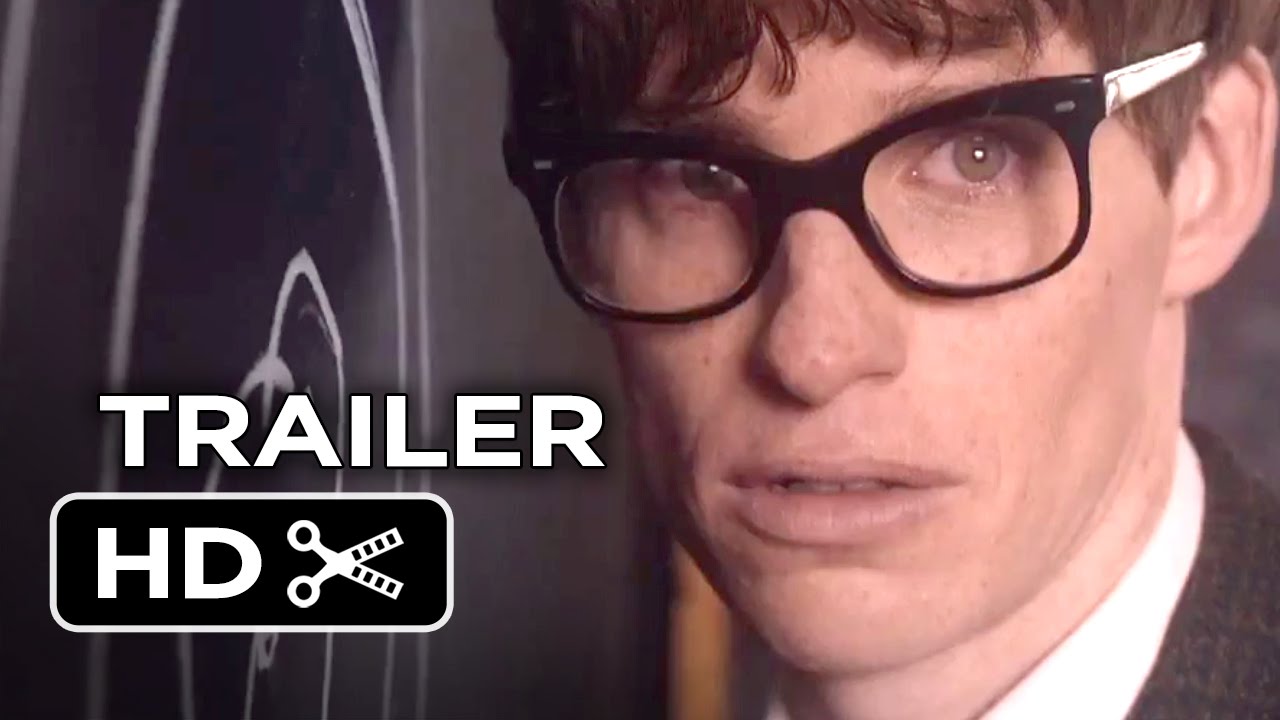
The film Theory of Everything sounds as though it was inspirational. It ought to be since Hawking is admirable for his will power in overcoming the limitations of his illness and using his powerful, creative mind to explore the limits of human knowledge. However, one has to bear in mind that a human being can only go so far. Recent science and philosophy shows that a real theory of everything is untenable - mainly because the 'everything' that such a theory would need to describe would include itself - a logical impossibility.  

I understand that Hawking himself has come to accept this since writing A Brief History of Time. Having abandoned this quest he seems to have become less than rational in his understanding of reality, as I hope to demonstrate below. He is not alone and I contend that the approaches of some theoreticians to the limits we are now coming across in trying to explain properties of the cosmos like fine tuning for life and the emergence of space-time (Big Bang) from existential nothingness are bizarre and unscientific, and arise from an understandable but needless fear of resorting to a god of the gaps.


Science is precious not only as a voyage of discovery but as the source of the prosperity of western civilisation through engineering, agriculture, transport, hygiene, and medicine, and more recently of other parts of the world which have followed its methods. But it needs guarding, especially with the notions of a 'post-truth' society and 'fake news' being talked about in the media without, I maintain, any general acknowledgement of the catastrophic implications for science, democracy and civilization.

A few years ago I read a timely criticism of the way science is reported in the popular press and interpreted by society at large (Bad Science, by Ben Goldacre). The cover blurb lists scaremongering journalists, pill pushing nutritionists, flaky statistics and evil pharmaceutical corporations.  Most of these distortions of objective truth come from outside the scientific establishment, threatening it with commercial or grant-related pressures.

Yet there is another enemy of academic research, in my view more insidious. It comes from the academics themselves.

In the 14th century the priest William of Occam proposed a concept which has been religiously followed by scientists to this day and is a cornerstone on which the exponential ascent of Western science has been built: Occam’s razor : a new scientific theory should explain the greatest number of phenomena for the least number of assumptions.  A theory which satisfies this criterion and which can be experimentally verified is deemed one step closer to an objective truth for which scientists strive, knowing that they will never reach it, but that what counts is the constant search for it.

There has also been a belief in the sacredness of truth. Professor James Lovelock, who professes not to be a religious man, recently referred to it as the ‘Holy Ghost’ of truth. In a BBC Beautiful Minds documentary Lovelock related how a prominent neo-Darwinist (Richard Dawkins) had bullied the editor of Nature into suppressing Lovelock's now widely acclaimed ideas on earth systems science, later known as Gaia. In March 1995 Dawkins also purportedly pressurised the editor of the Times Higher Education Supplement into not publishing a commissioned article, already trailored to appear in the next edition, since it attacked neo-Darwinism. See the Open Society and its Enemies. Such practices risk turning the foundation of science into sand and undermining the  power of peer reviewed academic publishing.

At the time the Big Bang theory of cosmology was first proposed Fred Hoyle (a leading astrophysicist and cosmologist at the time) opposed it in the face of mounting evidence, simply because he thought it implied the existence of a Creator. Instead he proposed a steady state model in which the universe was eternal and atoms just spontaneously appeared in the vacuum. A definite case of letting one's beliefs get in the way of truth. (Hoyle later appeared  to abandon scientific materialism and in the last book he wrote before his death, Cosmic Life Force, concluded that the universe had a mind.)

The Grand Design by Stephen Hawking and Leonard Mlodinow (2010) is a well written guided tour of modern elementary particle physics and cosmology which I found absorbing, if taxing in parts. I can certainly recommend this as a way of understanding how modern physicists attempt to interpret reality.

However, it resorts to post modern metaphysics, namely the abandonment of objective reality, the basis on which physics, chemistry, biology and engineering is built:


'Though realism may be a tempting viewpoint, as we'll see later, what we know about modern physics makes it a difficult one to defend.'

[22% through the book on my  old iPhone Kindle app]


Even special relativity theory acknowledges an objective reality and works out by mathematics (the Lorentz transformations)  how time, space and mass will seem to observers moving at different relative speeds. All its equations are verified by experiment. Quantum phenomena are difficult to pin down and very odd; e.g. in the famous double-slit experiment a pattern appears on a screen hit by particles according to whether one determines or does not determine the paths by which they arrive (NB: the experiment is so designed that measuring the path does not physically disturb the particle). This is no basis for abandoning belief in an objective reality: the challenge is to modify our models of reality, i.e. get a bit closer to the ultimate reality,  until we get some powerful model which incorporates those happenings which at present do not appear to make sense. Lightning did not make sense before the concept of electricity was devised and if you have ever had an electric shock you will know that the concept of electricity corresponds to something real.

Instead, Hawking (who other physicists disagree with)   throws out objective reality, adopts unsound mathematics (e.g. subtracting infinities from infinities) and makes non sequitur extrapolations from bizarre pictorial interpretations of a mathematical tool (Feynman’s ‘sum over histories’ method) for calculating the probability of a quantum event and links this to cosmology on the grounds that our universe probably started as a quantum phenomenon. The authors give up on trying to explain rigorously what they call our ‘apparently’ miraculous universe, which they admit is fine tuned for life to an inexplicable degree, and think they avoid the need to do so by postulating an unimaginably large number of other universes (10 with 500 zeros after it; there are 'only' 10 with 80 zeros atoms in the whole universe) with laws loosely defined by a network of string theories collectively called M-Theory, and an arbitrary number of dimensions (11 instead of the 4 we know: 3 of space and 1 of time; why not 10, or 99, or 100, or 1000 or any number you can think of?) ), all as much beyond scientific testing as Santa Claus. How such a monster assembly ever came into being is not mentioned.  It certainly does not 'explain' why  or even how sentient truth-seeking, love-seeking, morally aware beings originated or evolved  here, or anywhere else in our universe.       

This approach explains nothing and everything. If we observe a new unexplained phenomenon there is no need to delve into it, invent a radical new approach  and laboriously come up with a rigorously peer reviewed, testable theory, as Einstein did. Just say it is there by chance and was bound to happen in some universe somewhere. Suppose someone found that viruses on earth were spontaneously assembling in synchronization with fluctuations observed from a black hole. No need to explain. It just happens to occur in our universe. No surprise! If it had not started we, having emerged from viruses by chance, perhaps,  would not be here to see it.

William of Occam must be spinning in his grave, as must Newton and Einstein.

Science has reached an  impasse. Quantum phenomena like the double slit experiment, quantum erasure and entanglement have been modelled in several different ways, none of them sufficiently established to serve as a consensus theory. Attempts to unify the 4 forces of nature (electromagnetic, gravity, weak nuclear and strong nuclear) are in disarray, as appears to be indicated by the Large Hadron  Collider results, despite the recent confirmation of the Higgs boson. Even if a Unified Theory is achieved it will only be a theory of certain aspects of reality, not a Theory of Everything.

Cosmology is also confronting questions over inflation, the holographic principle (by which  our 4D space-time world would be the encodement of a 2D world), dark energy, dark matter, vacuum energy and much else. Over 95% of the stuff of the universe is a complete mystery, as is the way both ordinary and dark matter is orchestrated. All we know is that something is there and that some phenomena occur which can be predicted and modelled.

 Neo-Darwinism, though still having something to offer in terms of micro-evolution, struggles to come to terms with increasingly sophisticated mechanisms of macro-evolution, e.g. epigenetics, horizontal gene transfer, emergent complexity, sudden leaps forward in speciation and evolutionary convergence, which do not fit well with  blind adherence to evolution by descent with random incremental modifications. On the actual origin of life it has nothing substantive to offer. For some reason these increasingly compelling new findings in evolutionary biology are not getting into BBC science shows such as Horizon yet they should be embraced, not brushed aside. I have not yet come across a major science programme which stresses the importance of the recent discovery that the 98% of DNA referred to as junk only a decade ago is now accepted as being crucially functional. Recent discoveries showing that evolutionary pathways repeat themselves indicate that the mechanism of evolution is not random. Again, barely a mention in the popular science media. What the situation is in school biology teaching I dread to think.

When confronted with the inexplicable it is surely the job of the scientist to find new more powerful models, not retreat in denial or in order to satisfy some favoured view or ethos or ideology or metaphysical view or theology, or just to get career advancement or funding or the approval of the press or one’s friends.

 It is of course impossible to eliminate these worldly influences but, whether one is a scientist, an interested layman (like me) who enjoys witnessing God's wondrous creation  or just one who wants the world to go on advancing in a benevolent way, one can at least try to hold on to scientific truth as an ideal.  Science is not, I maintain, the only answer to human fulfillment; but it is a God-given gift without which material human progress stops. We descend into chaos with no prospect of a peaceful, prosperous life in the material world.

 John Sears

Author

2077:Knights of Peace
  
Twitter page 
 htpps://twitter.com/JohnSears2077